
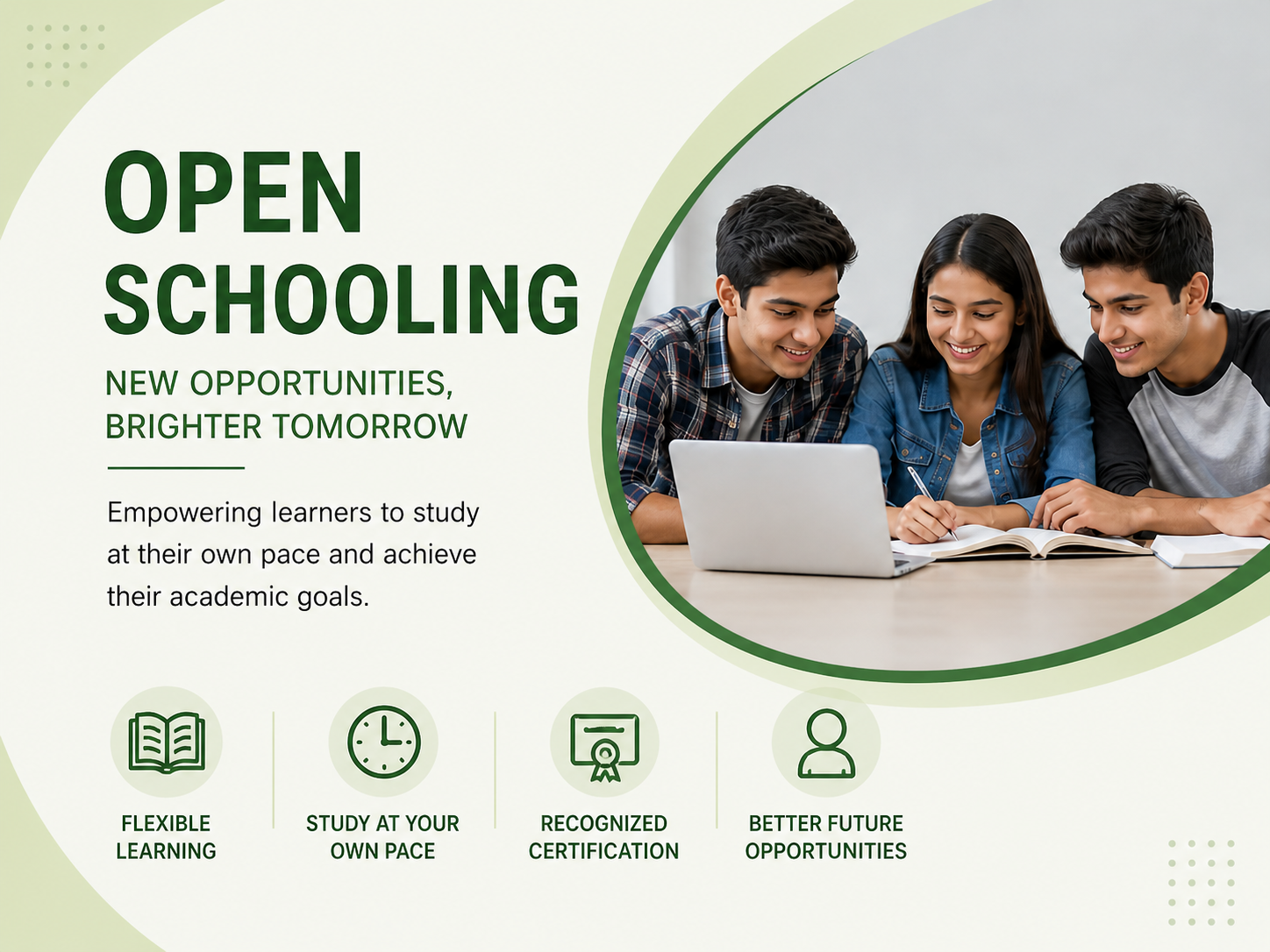
Comprehensive overview for students exploring Class 12 education through open schooling systems and flexible learning pathways.
Senior secondary education (Class 12) through open schooling systems provides an alternative pathway for students who wish to continue their studies outside traditional school environments. It is designed to support learners who require flexibility while maintaining a structured and recognized academic progression.
This system allows students to manage their studies based on individual schedules and learning preferences. It is suitable for learners balancing academic goals with personal or professional commitments.

Students can generally choose subjects based on their academic interests and future career goals. Common academic streams include Arts, Commerce, and Science. Subject combinations typically include languages, economics, accountancy, business studies, physics, chemistry, biology, mathematics, and geography.
In addition to academic subjects, vocational and skill-based subjects may also be available to support practical knowledge and career-oriented learning.
Open schooling systems follow a flexible and student-focused learning approach. Students can prepare through self-study, classroom coaching, or blended learning methods depending on their preferences. This flexibility allows learners to study comfortably without the pressure of a fixed school schedule.
Examinations are conducted as per the academic schedule defined by the respective education board. Students are assessed based on subject-wise performance and must meet the required criteria for successful completion.
Exam schedules and formats may vary depending on the board and session. Students are advised to stay updated through official sources.
Eligibility criteria, subject availability, and examination structures may vary depending on official board guidelines. Students are advised to verify all details through official sources before making academic decisions.
Students and parents may seek academic guidance to understand subject selection, eligibility requirements, and suitable study pathways for future education planning.
This page is intended for informational purposes only and does not represent any official educational board. For accurate and updated information, refer to the official website of the respective education board.